
uzbekistan tour guide
Uzbekistan Tour Guide: A Comprehensive Overview
Uzbekistan is rapidly emerging as a premier travel destination, showcasing its rich history, vibrant culture, and stunning landscapes to a growing international audience.
Uzbekistan, a captivating Central Asian nation, beckons travelers with its mesmerizing blend of ancient history and modern development. Situated along the legendary Silk Road, it offers a unique journey through time, revealing architectural marvels and cultural treasures. Recent initiatives, like the Uzbekistan-Qatar International Tourism Forum in Doha, demonstrate a focused effort to attract visitors, particularly from the Gulf region, aiming for millions of new tourists.
The country’s commitment to tourism is further highlighted by promotional events, such as the Beijing Tourism Presentation, showcasing its culinary delights and cultural heritage. From the alpine landscapes of the Fergana Valley to ambitious tourism projects like Silk Road Samarkand, Uzbekistan presents a diverse range of experiences for every traveler. Malaysia’s tourism delegation visit also underscores growing international interest.
Historical Significance: The Silk Road
Uzbekistan’s identity is inextricably linked to the Silk Road, the ancient network of trade routes that connected East and West. For centuries, cities like Samarkand, Bukhara, and Khiva flourished as vital hubs for commerce, culture, and the exchange of ideas. This legacy is visible today in the stunning Islamic architecture, bustling bazaars, and diverse traditions found throughout the country.
The Silk Road wasn’t merely a trade route; it was a catalyst for cultural fusion, leaving an indelible mark on Uzbekistan’s art, cuisine, and societal fabric. Modern tourism initiatives actively promote this historical significance, with projects like Silk Road Samarkand aiming to revive the spirit of this golden age, attracting visitors eager to explore this rich past.
Major Cities & Regions
Uzbekistan offers a diverse range of destinations, each with its unique charm. Samarkand, the “Jewel of the Silk Road,” captivates with its majestic Registan Square. Bukhara, a “Living Museum,” boasts well-preserved historical architecture and a tranquil atmosphere. Khiva, a fortress city, transports visitors back in time with its walled inner city, Itchan Kala.
Tashkent, the modern capital, provides a contrast with its Soviet-era architecture and contemporary amenities. Beyond these iconic cities, the Fergana Valley beckons with alpine landscapes, while the Nuratau Mountains offer opportunities for hiking and ecotourism. Exploring these regions reveals the breadth of Uzbekistan’s geographical and cultural diversity.
Samarkand: The Jewel of the Silk Road
Samarkand, a UNESCO World Heritage site, stands as a testament to Uzbekistan’s glorious past. The Registan Square, with its stunning madrasahs – Ulugbek, Tilya-Kori, and Sher-Dor – is the city’s iconic landmark. Nearby, the Gur-e-Amir mausoleum houses the tomb of Timur (Tamerlane), a powerful ruler.
Recent developments, like the “Silk Road Samarkand” tourism complex near the Olympic rowing canal, signal a modern ambition alongside historical preservation. Visitors can explore Shah-i-Zinda, a necropolis of dazzling mausoleums, and the Bibi-Khanym Mosque, showcasing intricate tilework. Samarkand truly embodies the spirit of the Silk Road.
Bukhara: A Living Museum
Bukhara, another UNESCO World Heritage city, offers a remarkably preserved historical center. Its labyrinthine streets reveal ancient madrasahs, mosques, and trading domes, creating an atmosphere frozen in time. The Poi Kalyan complex, featuring the Kalyan Minaret and Kalyan Mosque, dominates the skyline.
Explore the Samanid Mausoleum, a masterpiece of Islamic architecture, and the Chor Minor madrasah with its four distinctive minarets. Bukhara’s charm lies in its authenticity; it’s a place where traditional crafts thrive and local life unfolds amidst stunning historical monuments, truly earning its title as a ‘living museum.’

Khiva: A Fortress City
Khiva, enclosed within the ancient walls of Itchan Kala, presents a uniquely preserved fortress city. Stepping inside feels like traveling back in time, with its mud-brick architecture and intricate tilework. The city served as a vital trading post on the Silk Road, and its historical significance is palpable.
Explore the Kuhna Ark citadel, the Juma Mosque with its 218 carved wooden columns, and the Tash-Hauli Palace, showcasing exquisite craftsmanship. Khiva offers a more concentrated historical experience than other cities, allowing visitors to immerse themselves fully in its captivating past.
Tashkent: The Modern Capital
Tashkent, Uzbekistan’s vibrant capital, offers a compelling blend of Soviet-era architecture and modern development. Rebuilt after a devastating earthquake in 1966, the city boasts wide boulevards, impressive metro stations, and numerous parks. It serves as a crucial transportation hub and a gateway to exploring the rest of the country.
Visit the Khast Imam Complex, a significant Islamic center, and explore the bustling Chorsu Bazaar for a taste of local life. Tashkent provides a fascinating contrast to the ancient cities, showcasing Uzbekistan’s progression and contemporary culture.
Uzbekistan’s Cultural Heritage
Uzbekistan’s cultural heritage is a captivating tapestry woven from centuries of history, influenced by the Silk Road and Islamic traditions. The country proudly preserves its artistic legacy through stunning Islamic architecture, exemplified by magnificent madrasahs and mosques. Traditional arts flourish, with renowned ceramics and intricately woven silk textiles representing a vibrant part of daily life.
Uzbek cuisine is a culinary journey, offering flavorful dishes reflecting the region’s diverse influences. Cultural events and festivals showcase music, dance, and folklore, providing immersive experiences for visitors eager to connect with the nation’s soul.
Islamic Architecture & Madrasahs
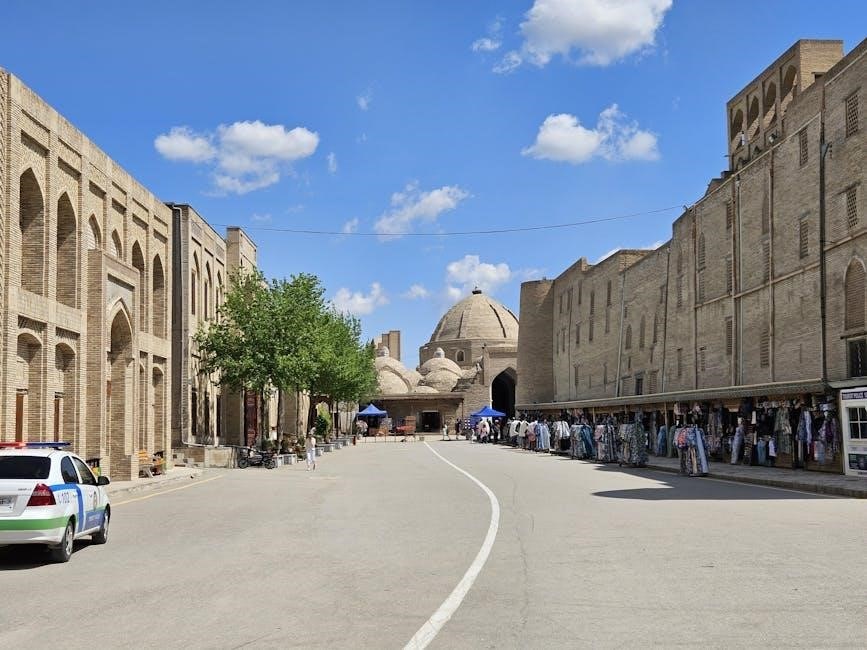
Uzbekistan boasts breathtaking Islamic architecture, a testament to its historical significance as a center of learning and faith. Magnificent madrasahs, like those in Samarkand and Bukhara, stand as iconic symbols of this heritage, showcasing intricate tilework and grand courtyards. These structures weren’t merely religious schools; they were complex hubs of intellectual and spiritual life.
Mosques adorned with stunning mosaics and minarets punctuate the skylines, while mausoleums honor revered figures. Exploring these architectural marvels offers a profound glimpse into the artistic and religious traditions that have shaped Uzbekistan for centuries.
Traditional Arts & Crafts (Ceramics, Silk Weaving)
Uzbekistan’s cultural identity is vividly expressed through its time-honored arts and crafts. Renowned for its exquisite ceramics, the country produces pottery adorned with vibrant geometric patterns and floral motifs, reflecting centuries of artistic tradition. Silk weaving is equally celebrated, with intricate ikats and luxurious textiles showcasing remarkable skill and artistry.
Visitors can witness these crafts being practiced in workshops and bazaars, offering opportunities to purchase authentic souvenirs and appreciate the dedication of local artisans. These traditions are not merely crafts; they are living embodiments of Uzbek heritage.
Uzbek Cuisine: A Culinary Journey
Uzbek cuisine is a delightful fusion of flavors, influenced by its Silk Road history and nomadic traditions. Plov, a rice dish cooked with meat, carrots, and onions, is considered the national dish and a culinary centerpiece. Shashlik (grilled meat skewers) and hearty soups like shurpa are also staples.
Beyond the main courses, visitors can savor fresh fruits, flavorful breads, and delicate pastries. Exploring local markets and dining in traditional chaikhanas (teahouses) provides an authentic gastronomic experience, revealing the warmth and hospitality of Uzbek culture through its food.

Planning Your Trip to Uzbekistan
Careful planning is key to a smooth Uzbek adventure. Visa requirements vary by nationality; checking the latest regulations is crucial. The best time to visit is spring (April-May) or autumn (September-October) for pleasant weather. Summer can be scorching, while winters are cold, especially in mountainous regions.
Transportation options include domestic flights connecting major cities, a reliable train network, and readily available taxis. Considering pre-booking accommodations, especially during peak season, is advisable. Staying informed about local customs and respecting traditions will enhance your travel experience.
Visa Requirements & Travel Regulations
Uzbekistan has significantly eased visa restrictions in recent years, promoting tourism. Many nationalities can now enter visa-free for a specified period, typically 30 days, for tourism purposes. However, it’s essential to verify current requirements based on your citizenship before travel. An e-visa is also a convenient option for eligible countries.
Registration with local authorities is generally required within 72 hours of arrival, often handled by hotels. Travelers should be aware of local laws and customs, respecting cultural sensitivities. Ensure your passport is valid for at least six months beyond your intended stay.
Best Time to Visit (Seasonal Considerations)
Spring (April-May) and Autumn (September-October) are widely considered the best times to visit Uzbekistan, offering pleasant temperatures and comfortable weather for exploring. These seasons avoid the scorching heat of summer and the cold of winter.
Summer (June-August) can be extremely hot, particularly in desert regions, but is suitable for those prepared for high temperatures. Winter (November-March) brings cold temperatures and occasional snowfall, ideal for experiencing a different side of the country, though some attractions may have limited hours. Consider regional variations; the Fergana Valley enjoys milder conditions.
Transportation Options (Flights, Trains, Taxis)
Flights connect Tashkent to major international hubs, with Uzbekistan Airways being the national carrier. Domestic flights efficiently link key cities like Samarkand and Bukhara. Trains are a comfortable and scenic way to travel between major destinations, offering both day and overnight options. The high-speed “Afrosiyob” train is particularly convenient.
Within cities, taxis are readily available and affordable, often hailed on the street or booked through apps. Marshrutkas (minibuses) provide a local and budget-friendly transport option, though they can be crowded. Consider using ride-hailing services for convenience and fixed fares.
Accommodation in Uzbekistan
Uzbekistan offers a diverse range of accommodation to suit every budget and preference. Modern hotels, including international chains, are prevalent in Tashkent and larger cities, providing familiar comforts and amenities. Numerous guesthouses offer a more intimate and culturally immersive experience, often run by local families.
For a truly unique stay, consider traditional yurts in rural areas, providing an authentic nomadic experience. Restored traditional houses, particularly in historic cities, offer charming and atmospheric lodging. Booking platforms are increasingly popular, but direct contact with guesthouses can sometimes yield better rates.
Hotels & Guesthouses
Uzbekistan’s hotel scene is modernizing, with international brands establishing a presence in Tashkent and Samarkand, offering expected standards of comfort and service. These range from luxury five-star options to more affordable business hotels. However, the heart of Uzbek hospitality lies within its numerous guesthouses.
These family-run establishments provide a personal touch, often including home-cooked meals and insights into local life. Guesthouses are particularly abundant in historic cities like Bukhara and Khiva, offering charming, traditionally decorated rooms. Booking in advance is recommended, especially during peak season, to secure preferred options.
Unique Stays (Yurts & Traditional Houses)
Uzbekistan offers immersive lodging experiences beyond conventional hotels. For a truly authentic adventure, consider staying in a traditional yurt, particularly in areas like the Fergana Valley or near Nuratau Mountains. These portable dwellings, historically used by nomadic peoples, provide a glimpse into the country’s cultural heritage.
Alternatively, explore opportunities to stay in renovated traditional houses within historic cities. These homes, often featuring courtyards and intricate woodwork, offer a peaceful retreat. Such accommodations provide a unique connection to local life and architecture, enhancing the overall travel experience and fostering cultural exchange.
Outdoor Activities & Natural Wonders
Uzbekistan isn’t solely about historical cities; it boasts diverse natural beauty perfect for outdoor enthusiasts. The Fergana Valley presents alpine landscapes, stunning reservoirs, and opportunities for hiking and enjoying breathtaking scenery. Venture into the Nuratau Mountains for ecotourism adventures, discovering unique flora and fauna while supporting sustainable travel;
Explore remote regions, engage in trekking, or simply relax amidst pristine nature. These areas offer a refreshing contrast to the urban centers, showcasing a different side of Uzbekistan’s appeal; Discover hidden gems and experience the country’s commitment to preserving its natural heritage.
Fergana Valley: Alpine Landscapes & Reservoirs
Fergana Valley, nestled in eastern Uzbekistan, is a haven for nature lovers. Soaring peaks create dramatic alpine landscapes, offering incredible views and challenging hiking trails. Emerald slopes cascade down to meet the crystal-clear waters of numerous reservoirs, providing picturesque settings for relaxation and recreation.
This region is ideal for exploring the natural wonders of Uzbekistan, with opportunities for trekking, birdwatching, and simply immersing yourself in the tranquility of the mountains. Discover hidden waterfalls, lush meadows, and experience the unspoiled beauty of this captivating valley. It’s a true escape for those seeking adventure.
Nuratau Mountains: Hiking & Ecotourism
The Nuratau Mountains present a unique opportunity for hiking and ecotourism in Uzbekistan. This relatively undiscovered range offers a pristine wilderness experience, far removed from the bustling cities. Explore rugged terrain, encounter diverse wildlife, and discover traditional villages where time seems to stand still.
Ecotourism initiatives are flourishing here, promoting sustainable travel practices and supporting local communities. Visitors can participate in guided treks, stay in community-based guesthouses, and learn about the region’s rich biodiversity. The Nuratau Mountains are a perfect destination for responsible travelers seeking authentic cultural immersion and breathtaking natural beauty.
Tourism Development & Initiatives
Uzbekistan is actively pursuing ambitious tourism development initiatives to attract a wider range of visitors. The Uzbekistan-Qatar International Tourism Forum in Doha highlighted plans to draw millions of Gulf visitors, showcasing the country’s cultural legacy and booming tourism sector. Promotional events, like the Beijing Tourism Presentation hosted by the Uzbek Embassy in China, are crucial for raising international awareness.
These efforts demonstrate a commitment to modernizing tourism infrastructure and diversifying offerings. Collaboration with countries like Malaysia, evidenced by a working visit from over 25 Malaysian travel companies, further strengthens Uzbekistan’s position as a rising tourism hotspot.
Uzbekistan-Qatar International Tourism Forum
Uzbekistan prominently showcased its expanding tourism sector and rich cultural heritage at the Uzbekistan-Qatar International Tourism Forum held in Doha. This event served as a pivotal platform to unveil strategic plans aimed at attracting a substantial influx of visitors from Gulf nations. The forum highlighted Uzbekistan’s unique appeal, emphasizing its historical sites, modern developments, and welcoming atmosphere.
The initiative underscores a focused effort to diversify tourism markets and strengthen ties with key partners in the region. By presenting its offerings to a targeted audience, Uzbekistan aims to establish itself as a premier destination for travelers seeking authentic cultural experiences and modern amenities.
Promotional Events (e.g., Beijing Tourism Presentation)
Uzbekistan actively promotes its tourism potential through targeted events like the Presentation of the Tourism, Culinary and Culture of Uzbekistan held in Beijing. Hosted by the Embassy of the Republic of Uzbekistan in China, this event showcased the nation’s diverse attractions to a Chinese audience. Sabina Baikuvatova represented Uzbekistan at the cultural showcase, highlighting the country’s unique offerings.
These promotional efforts aim to increase awareness and attract visitors, emphasizing Uzbekistan’s Silk Road history, delicious cuisine, and vibrant cultural traditions. Such initiatives are crucial for establishing Uzbekistan as a desirable travel destination within the growing Chinese tourism market and beyond.