
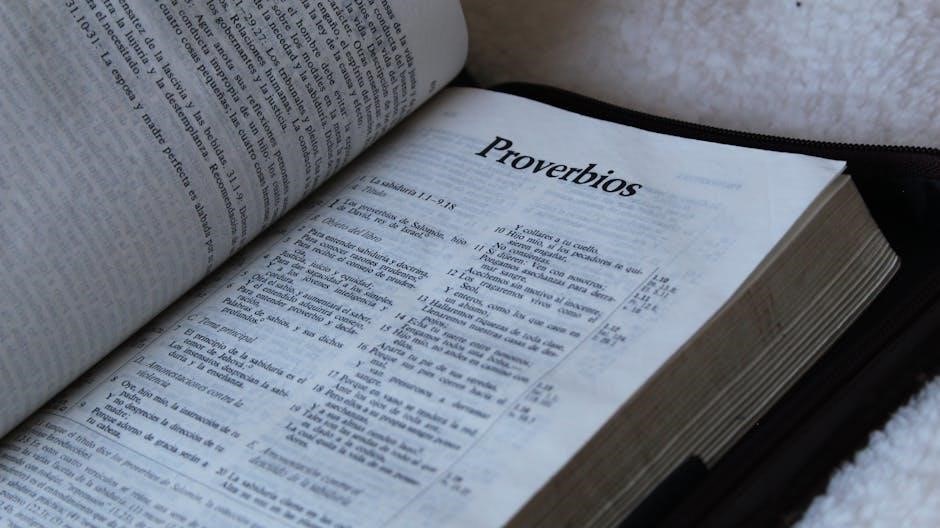
study guide for proverbs
Proverbs‚ penned by Solomon and others‚ offers timeless wisdom‚ guiding readers toward discernment and righteous living through insightful sayings and practical instruction․
This study guide delves into the book’s structure‚ themes‚ and application‚ revealing how ancient truths address modern challenges and foster spiritual maturity․
Key verses (1:4-6) highlight the book’s purpose: imparting wisdom to the naive‚ knowledge to the young‚ and deeper understanding to the already wise․
Exploring Proverbs unveils a path to navigate life’s complexities‚ embracing justice‚ discipline‚ and the foundational fear of the Lord for a fulfilling existence․
Overview of Proverbs in the Bible
Proverbs occupies a unique space within the Old Testament‚ diverging from narrative history or prophetic pronouncements․ It’s primarily a collection of mashal – concise sayings expressing universal truths about life‚ morality‚ and God’s design․
The book isn’t presented as a systematic theological treatise‚ but rather as a compilation of practical wisdom accumulated over generations‚ largely attributed to King Solomon (Proverbs 1:1)․ However‚ contributions from other wise individuals‚ like Agur (Proverbs 30) and King Lemuel (Proverbs 31)‚ enrich its scope․
Proverbs is categorized into several sections‚ including Solomon’s proverbs (1:1-9:18)‚ collections by Hezekiah’s men (10:1-22:16)‚ and further sayings of the wise (22:17-31:9)․ Its placement within the poetic books—Job‚ Psalms‚ Song of Solomon‚ and Ecclesiastes—reflects its literary artistry and focus on experiential wisdom․
Understanding Proverbs requires recognizing its emphasis on observation‚ discernment‚ and the consequences of choices‚ offering guidance for navigating daily life with integrity and prudence․

Authorship and Historical Context

Proverbs is primarily attributed to King Solomon‚ renowned for his wisdom (1 Kings 4:29-34)‚ with the initial verses (1:1-9:18) explicitly linked to his reign during Israel’s united monarchy (c․ 970-930 BC)․ However‚ the book isn’t solely his work․
Collections were compiled by Hezekiah’s men (Proverbs 25:1)‚ indicating editorial activity during the 8th century BC․ Later additions include sayings from Agur (Proverbs 30) and Lemuel (Proverbs 31)‚ whose origins remain less certain‚ potentially dating to a later period․
The historical context reflects a settled‚ agricultural society where observation of nature and human behavior provided the raw material for wisdom․ Proverbs addresses issues relevant to court life‚ family relationships‚ commerce‚ and social justice within that ancient Israelite setting․

Recognizing this context is crucial for interpreting the proverbs accurately‚ avoiding anachronistic applications and appreciating their original intent․
The Purpose of Proverbs: Wisdom and Instruction
Proverbs aims to impart practical wisdom – the ability to navigate life skillfully and make sound judgments․ It’s not a promise of easy answers‚ but a guide to discerning truth and avoiding folly (Proverbs 1:7)․ The book’s opening verses (1:2-6) explicitly state its purpose: to know wisdom and instruction‚ to understand words of insight․
This wisdom isn’t merely intellectual; it’s deeply connected to moral character and reverence for God (“Fear of the Lord is the beginning of knowledge‚” Proverbs 9:10)․ Proverbs seeks to shape the heart and mind‚ fostering righteousness and ethical behavior․
The instruction provided is designed for all ages‚ from the “simple” (naive) to the “wise‚” offering guidance for every stage of life; It’s a study guide for living well‚ grounded in divine principles․

Understanding the Literary Structure
Proverbs employs concise sayings‚ parallelism‚ and vivid imagery to convey wisdom effectively․ Recognizing these literary devices unlocks deeper meaning within the text․
This study guide will explore these techniques‚ enhancing comprehension and appreciation of the book’s poetic and instructional power․
Proverbial Sayings: Characteristics and Forms
Proverbial sayings within the Book of Proverbs are characterized by their brevity‚ wit‚ and memorable phrasing․ They aren’t lengthy discourses‚ but rather concise observations about life‚ morality‚ and human behavior․ This study guide highlights that these sayings often present general truths‚ not absolute promises‚ requiring thoughtful application․
Common forms include two-part parallel statements‚ contrasts‚ and comparisons‚ designed to be easily remembered and repeated․ For example‚ “Like snow in summer or rain in harvest‚ honor is not fitting for a fool” (26:1) uses a striking comparison․
These sayings frequently employ figurative language‚ such as metaphors and similes‚ to illustrate abstract concepts․ Understanding these forms is crucial for accurately interpreting the wisdom contained within Proverbs and applying it to daily life․ They are designed to provoke thought and encourage wise decision-making․
Parallelism in Proverbs: A Key Literary Device
Parallelism is a defining characteristic of Hebrew poetry‚ and profoundly shapes the Book of Proverbs․ This study guide emphasizes that it’s not merely stylistic‚ but a crucial element for understanding meaning․ It involves repeating a thought in different words‚ often in two or three lines․
There are several types: synonymous parallelism (repeating the same idea)‚ antithetical parallelism (contrasting ideas)‚ and emblematic parallelism (the second line illustrates the first)․ Recognizing these patterns unlocks deeper insights․
For instance‚ a proverb might state a principle‚ then reinforce it with a similar statement․ This technique aids memorization and emphasizes the importance of the message․ It also creates a sense of balance and completeness․ Mastering the recognition of parallelism is vital for effective interpretation of Proverbs’ wisdom․
The Use of Imagery and Metaphor
This study guide highlights how Proverbs powerfully employs imagery and metaphor to convey abstract concepts․ Rather than direct instruction‚ wisdom is often presented through vivid comparisons‚ making it memorable and relatable․ For example‚ comparing folly to snow in summer (26:1) illustrates its inappropriateness․
Metaphors‚ like a “bridle for the donkey” (26:3)‚ represent control and discipline․ Imagery related to wealth‚ poverty‚ speech‚ and relationships paints compelling pictures of their consequences․
Understanding these figures of speech is crucial; literal interpretations can miss the intended meaning․ Proverbs utilizes everyday experiences – farming‚ family life – to illustrate universal truths․ Recognizing these literary devices unlocks a richer‚ more nuanced understanding of the book’s wisdom․

Key Themes in Proverbs
Proverbs centers on the contrast between wisdom and folly‚ emphasizing righteousness‚ justice‚ and the vital role of discipline in shaping character and life’s direction․
This study guide reveals how these themes intertwine‚ offering practical guidance for ethical living and fostering a God-centered worldview․
Wisdom vs․ Folly
Proverbs consistently presents a stark dichotomy between wisdom and folly‚ portraying them not merely as intellectual states‚ but as lifestyle choices with profound consequences․
This study guide illuminates how wisdom‚ rooted in the fear of the Lord (Proverbs 9:10)‚ leads to a life of understanding‚ prudence‚ and long-lasting fulfillment․
Conversely‚ folly is depicted as reckless‚ self-destructive‚ and ultimately leading to shame and ruin․ The “fool” in Proverbs isn’t simply unintelligent‚ but morally deficient‚ rejecting instruction and embracing impulsive behavior․
Key passages demonstrate that choosing wisdom involves humility‚ attentiveness to counsel‚ and a commitment to righteous living‚ while folly stems from pride‚ stubbornness‚ and a disregard for God’s principles․ Recognizing this contrast is crucial for navigating life’s challenges and making sound decisions․
Proverbs urges readers to actively pursue wisdom and shun folly‚ recognizing their eternal significance․
The Importance of Righteousness and Justice
This study guide reveals that Proverbs places paramount importance on righteousness and justice‚ viewing them as foundational pillars of a flourishing society and a fulfilling individual life․
Righteousness‚ encompassing moral integrity and obedience to God’s law‚ is presented as the path to blessing‚ security‚ and lasting prosperity․ Justice‚ defined as fairness and impartiality‚ is essential for maintaining social order and protecting the vulnerable․
Proverbs condemns oppression‚ dishonesty‚ and the exploitation of others‚ emphasizing the need for leaders and individuals alike to uphold ethical standards․ The book highlights that true wealth isn’t measured in material possessions‚ but in righteous character․
Key verses demonstrate that God actively champions the cause of the righteous and judges the wicked‚ reinforcing the importance of living a life of integrity and advocating for justice․ Pursuing righteousness isn’t merely a moral obligation‚ but a pathway to divine favor․
The Role of Discipline and Correction
This study guide emphasizes that Proverbs doesn’t shy away from the necessity of discipline and correction‚ presenting them not as punitive measures‚ but as acts of love and pathways to wisdom․
The book consistently portrays discipline as essential for character development‚ particularly for the young․ Accepting correction demonstrates humility and a willingness to learn‚ leading to growth and avoiding foolishness․ Proverbs warns against rejecting rebuke‚ as it leads to stubbornness and ultimately‚ destruction․
Key verses illustrate that a wise parent disciplines their child‚ shaping their behavior and instilling moral values․ Similarly‚ God disciplines those He loves‚ refining them through trials and challenges․
Proverbs highlights that discipline‚ though sometimes painful‚ yields the peaceful fruit of righteousness․ It’s a vital component of a life lived in accordance with God’s will‚ fostering maturity and preventing future errors․

Practical Applications of Proverbs
This study guide reveals how Proverbs offers actionable wisdom for daily life‚ impacting speech‚ finances‚ and relationships with timeless‚ relevant guidance․
Applying these principles fosters better communication‚ responsible stewardship‚ and harmonious interactions‚ leading to a more fulfilling and righteous existence․
Proverbs on Speech and Communication
This study guide highlights Proverbs’ emphasis on the power of words‚ urging careful consideration before speaking (Proverbs 15:1)․ The book consistently warns against reckless speech‚ gossip‚ and lying‚ emphasizing truthfulness and kindness as hallmarks of wisdom․
Proverbs advocates for gentle answers that quell anger (15:1) and encourages thoughtful responses rather than hasty reactions․ It stresses the importance of avoiding flattery and speaking with integrity‚ recognizing that words can build up or tear down (16:24)․
Furthermore‚ Proverbs underscores the value of listening and seeking understanding before offering advice․ It cautions against revealing secrets and promotes discretion in conversation․ Mastering these principles cultivates healthy relationships and fosters effective communication‚ reflecting a heart aligned with wisdom․
Proverbs on Wealth and Poverty
This study guide reveals Proverbs’ nuanced perspective on wealth and poverty‚ moving beyond simple condemnation or glorification․ The book doesn’t promise riches but cautions against the dangers of pursuing wealth at the expense of integrity (28:20)․
Proverbs advocates for diligence and hard work as pathways to provision‚ yet warns against trusting solely in riches‚ which are fleeting (11:28)․ It emphasizes generosity towards the poor and vulnerable‚ viewing compassion as a righteous act (19:17)․
Proverbs also cautions against envy and covetousness‚ highlighting contentment as a key to inner peace․ True wealth‚ according to Proverbs‚ lies not in material possessions but in wisdom‚ character‚ and a relationship with God‚ offering lasting value․
Proverbs on Relationships and Family
This study guide illuminates Proverbs’ profound insights into building strong‚ healthy relationships and nurturing family life․ The book emphasizes the importance of honoring parents (30:17) and the blessings of a loving marriage (18:22)․
Proverbs stresses the value of faithful friendship‚ warning against those who offer false flattery or exploit trust (17:17)․ It highlights the power of kind words and the destructive nature of gossip (16:24‚ 18:21)․
Proverbs also addresses conflict resolution‚ advocating for humility‚ patience‚ and a willingness to forgive․ A peaceful home‚ built on wisdom and mutual respect‚ is presented as a cornerstone of a flourishing life‚ reflecting God’s design․

Difficult Proverbs and Interpretations
This study guide acknowledges that some Proverbs present interpretive challenges‚ requiring careful consideration of cultural context and potential nuances in meaning․
Understanding apparent contradictions demands a holistic approach‚ recognizing that wisdom often employs paradox to convey deeper truths and provoke thoughtful reflection․
Addressing Seemingly Contradictory Statements
This study guide recognizes that Proverbs occasionally presents statements that appear to contradict one another upon initial reading․ This isn’t a flaw‚ but a characteristic of Hebrew poetic parallelism and wisdom literature․
Often‚ these aren’t absolute rules‚ but observations from different perspectives or addressing distinct circumstances․ For example‚ a proverb advocating caution might exist alongside one encouraging boldness – each valid in its context․
Careful interpretation requires identifying the specific situation each proverb addresses․ Consider the underlying principle rather than literal application․ Examining the surrounding verses and broader themes within Proverbs provides crucial clarity․
Furthermore‚ recognizing that Proverbs offers general guidelines‚ not rigid laws‚ is essential․ Wisdom isn’t about finding a formula‚ but developing discernment to apply principles appropriately in diverse life scenarios․
Cultural Context and Understanding
This study guide emphasizes the importance of understanding the ancient Near Eastern cultural context when interpreting Proverbs․ The book reflects the societal norms‚ values‚ and daily life of ancient Israel‚ significantly shaping its meaning․
Concepts like honor‚ shame‚ family lineage‚ and social hierarchy were paramount․ References to agriculture‚ trade‚ and household management reveal the realities of the time․ Ignoring this context can lead to misinterpretations․
For instance‚ proverbs concerning wealth and poverty must be understood within a society where social mobility was limited․ Similarly‚ statements about discipline reflect patriarchal family structures․
Diligent study involves researching ancient Israelite customs and comparing Proverbs with other ancient wisdom literature․ Recognizing these cultural nuances unlocks a richer‚ more accurate understanding of the text’s original intent;
The Value of Contextual Interpretation
This study guide stresses that Proverbs isn’t a collection of isolated‚ universally applicable statements․ Contextual interpretation is crucial for accurate understanding․ Each proverb exists within a larger literary and thematic framework;
Consider the surrounding verses‚ the section’s overall argument‚ and the book’s overarching purpose․ Avoid “proof-texting” – selecting verses out of context to support pre-conceived notions․ A proverb’s meaning can shift based on its placement․
Furthermore‚ recognizing the literary devices employed – parallelism‚ imagery‚ metaphor – enhances comprehension․ Understanding the intended audience and the author’s purpose are also vital․
Careful study demands reading Proverbs as a cohesive whole‚ not merely a random assortment of wise sayings․ This approach reveals the nuanced wisdom and practical guidance embedded within the text․

Proverbs and Christian Living Today
This study guide reveals Proverbs’ enduring relevance‚ offering practical wisdom for navigating modern life with biblical principles and fostering spiritual growth․
Applying its teachings cultivates character‚ strengthens relationships‚ and guides decision-making‚ reflecting God’s design for a flourishing life rooted in righteousness․
Applying Timeless Wisdom to Modern Life
This study guide demonstrates how Proverbs’ ancient insights remain remarkably applicable to contemporary challenges․ In a world saturated with information and moral ambiguity‚ the book’s emphasis on discernment (Proverbs 1:4-6) is crucial․

Consider its guidance on speech (Proverbs 10:19) – a vital skill in our age of instant communication․ Proverbs offers practical advice on financial stewardship (Proverbs 3)‚ countering consumerism and promoting responsible living․
Navigating relationships benefits from its wisdom on conflict resolution and the importance of humility․ Furthermore‚ the book’s call to justice (Proverbs 21:3) challenges us to advocate for the vulnerable and uphold ethical standards in all areas of life․
By thoughtfully applying these principles‚ Christians can live purposefully and authentically‚ embodying wisdom in a complex world․
The Relevance of Proverbs for Spiritual Growth
This study guide reveals how Proverbs isn’t merely practical advice‚ but a pathway to deeper spiritual maturity․ The “fear of the Lord” (Proverbs 1:7) – reverence and awe – forms the foundation for wisdom and a right relationship with God․
Proverbs cultivates humility‚ recognizing our dependence on divine guidance․ Its emphasis on righteousness (Proverbs 21:3) aligns our hearts with God’s character‚ fostering integrity and moral courage․
Disciplining our thoughts and actions‚ as Proverbs advocates‚ mirrors the fruit of the Spirit․ The book’s call to seek wisdom (Proverbs 2:1-5) parallels the pursuit of God’s will through prayer and scripture․
Ultimately‚ engaging with Proverbs transforms us‚ shaping us into individuals who reflect God’s wisdom and grace in every aspect of life․
Resources for Further Study of Proverbs
Expanding your study beyond this guide‚ consider the New International Version (NIV) and New King James Version (NKJV) for varied translations․ Bible Gateway Plus offers 3‚100 study tools‚ enhancing comprehension․
The NIV Reverse Interlinear Bible provides Hebrew and Greek insights‚ bridging the gap between original texts and English understanding․ Commentaries by respected theologians offer in-depth analysis of each proverb’s context․
Online resources like BibleHub and Blue Letter Bible provide access to original languages‚ concordances‚ and cross-references․
Exploring works specifically on wisdom literature will broaden your perspective․ Remember‚ consistent study and prayerful reflection are key to unlocking Proverbs’ transformative power․